
Colorado Springs Construction Defect Lawyer | Hollington Law
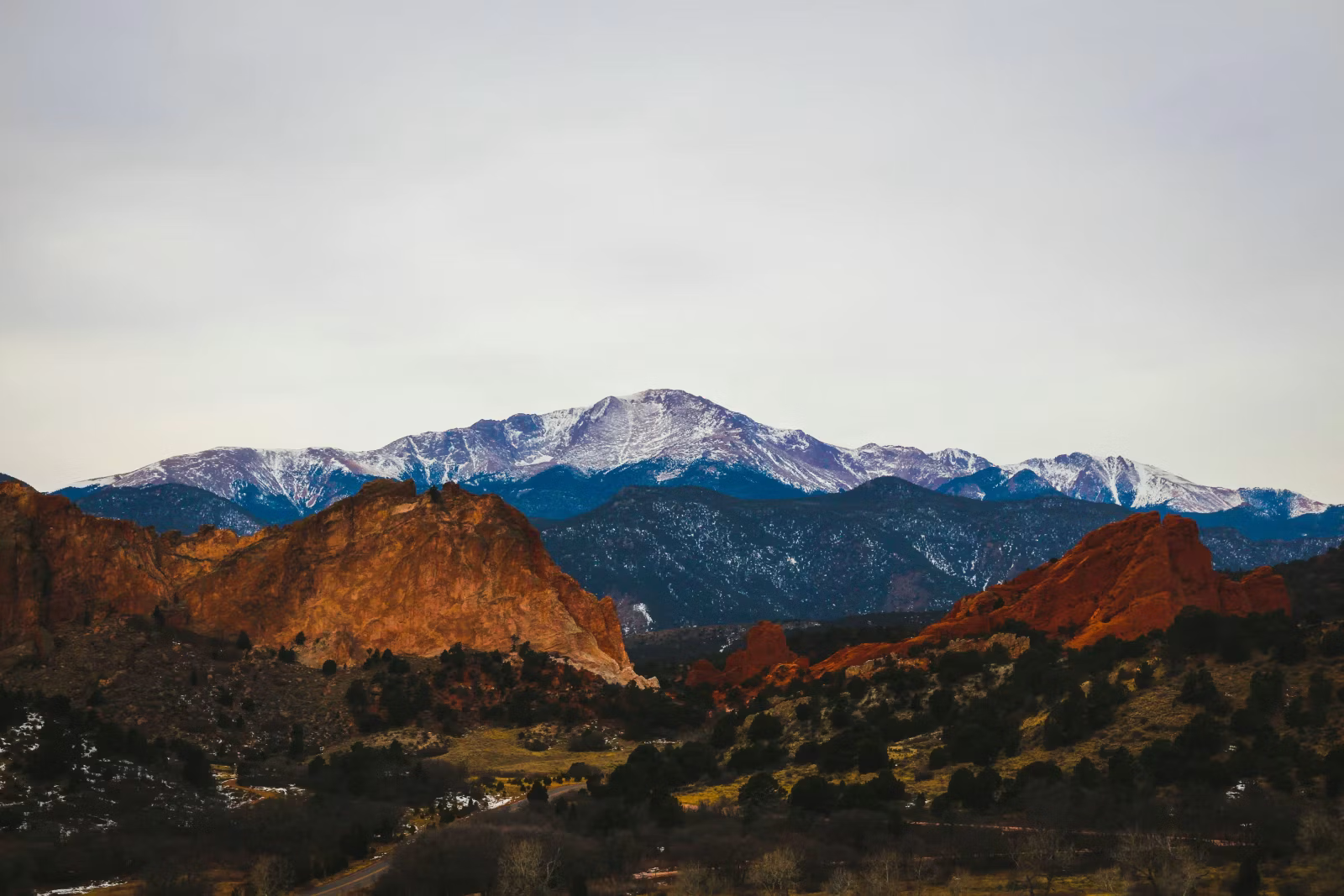
Colorado Springs sits in a different construction environment than the Front Range markets to the north. The combination of high elevation, severe hail and wind exposure, mountain-foothill geology, and a steady supply of new construction driven by military relocation and population growth has produced its own catalog of defect issues. When something goes wrong with a Colorado Springs home — foundation movement on the bluffs, hail-related cladding failures in Briargate, wildfire-rebuild workmanship in Black Forest — homeowners need a construction defect lawyer who understands the local conditions and the legal regime that governs claims in El Paso County.
Hollington Law Firm represents Colorado Springs homeowners in construction defect matters throughout El Paso, Pueblo, and Teller Counties. This page explains how Colorado Springs construction defect cases tend to develop, what the common patterns are, and what to do if you suspect your home has one.
Why Construction Defects in Colorado Springs Are Different
Three factors shape Colorado Springs defect work: the weather, the geology, and the speed of new construction.
Severe Weather Exposure
Colorado Springs is in one of the most hail-prone corridors in the United States. Major hailstorms — including the 2018 storm that produced more than $2 billion in insured losses — have driven cycles of roof and exterior replacements across the city. The rebuild work itself becomes a source of defects:
Roofs replaced under insurance pressure with inadequate underlayment or improper flashing
Stucco and siding repaired around hail damage without addressing underlying moisture issues
Window and skylight replacements without correct flashing details
Gutter and downspout work that creates rather than corrects drainage problems
High winds compound the issue. Sustained gradient winds and downsloping events from the Front Range routinely exceed 70 mph, and any defect in roof attachment, cladding fastening, or chimney flashing tends to fail under that load.
Foothill Geology and Bluff Lots
Western Colorado Springs sits against the Front Range, and many of the city's most desirable neighborhoods — including the Broadmoor, Cheyenne Mountain, Mountain Shadows, and Old North End areas — involve foothill, bluff, or steep-lot construction. Northern Colorado Springs and the bluff country around Black Forest and Monument introduce additional issues:
Bentonite and expansive clay along the I-25 corridor and into the eastern part of the city
Steeply graded lots requiring engineered foundations, retaining walls, and grade beams
Pierre shale and other problem formations in pockets of the metro
High groundwater in lower-lying parts of Fountain and southern Colorado Springs
Builders who use generic foundation designs without site-specific geotechnical investigation regularly produce homes that move within their first decade.
Rapid New Construction and Military Relocation
Colorado Springs has one of the highest concentrations of military families in the United States, served by Fort Carson, the Air Force Academy, Peterson Space Force Base, and Schriever Space Force Base. The constant rotation of military families drives sustained demand for new construction, and volume builders have responded with rapid project cycles in Briargate, Powers, Falcon, Banning Lewis Ranch, and other east-side communities.
When a builder turns out 200 homes a year in a single subdivision, the defect patterns become predictable:
Rough-framing inconsistencies as crews rotate across projects
Repetitive installation defects (the same flashing detail done wrong on every house)
Mechanical and electrical work performed without close supervision
Drainage and grading completed before all lots in a phase are finished, then disturbed
Wildfire Rebuild Work
The Black Forest Fire (2013) and the Waldo Canyon Fire (2012) destroyed hundreds of homes in and around Colorado Springs. The rebuild work in those communities — and in adjacent foothill neighborhoods where homeowners voluntarily upgraded to wildfire-resistant construction — continues to produce defect claims as the early rebuilds age past their builder warranties.
Common Construction Defects We See in Colorado Springs Homes
Patterns across the Colorado Springs caseload:
Roof and exterior envelope
Roofs replaced after hail with deficient underlayment, ice-and-water shield, or flashing
Stucco systems installed without proper weep screeds, control joints, or kickout flashing
Siding penetrations not flashed correctly at hose bibs, dryer vents, and electrical penetrations
Chimney chase and roof-to-wall flashing failures
Gutters and downspouts directing water toward foundations
Structural and geotechnical
Foundation movement on expansive soils in eastern and northern Colorado Springs
Bluff-lot foundations with inadequate caissons or retaining systems
Settlement in fill areas where compaction was not properly verified
Cracking and rotation in walkout-basement walls on sloped lots
Workmanship in volume new construction
Framing connections missing or installed incorrectly
Mechanical penetrations through firewalls and rated assemblies
HVAC undersized or improperly ducted for the elevation
Window and door installations without proper sill pans or flashing
Basement finishing done by volume builders without inspections or with inadequate egress
Mountain and foothill homes
Drainage failures on sloped lots
Retaining wall failures
Deck and balcony attachments that fail under wind and snow loading
Roof systems undersized for snow loads at elevation
Your Legal Rights as a Colorado Springs Homeowner
Colorado's Construction Defect Action Reform Act, C.R.S. §§ 13-20-801 through 13-20-808 governs construction defect claims throughout the state. CDARA imposes a pre-litigation sequence that applies in El Paso County the same way it does in Denver or Boulder.
The Notice of Claim Process
Before filing a construction defect lawsuit, a Colorado Springs homeowner must serve a Notice of Claim on the builder, contractor, or design professional under C.R.S. § 13-20-803.5. The notice triggers:
A 30-day inspection period for the builder
A 60-day offer period in which the builder may offer repair, payment, or both
The homeowner's election to accept, reject, or treat the offer as inadequate
The notice must describe each alleged defect with reasonable specificity. Suing without a proper notice can lead to dismissal and the loss of fee-shifting protections.
Statutes of Limitations and Repose
Under C.R.S. § 13-80-104, Colorado imposes:
A two-year statute of limitations from discovery of the defect, and
A six-year statute of repose from substantial completion, extended to eight years if the defect manifests in the fifth or sixth year
For Colorado Springs homeowners, the discovery date is frequently contested in hail-related cases. A roof failure that occurs five years after a hail-driven replacement may relate to the original construction, the replacement work, or a subsequent repair — and the operative deadline may differ for each.
Insurance Overlay
A meaningful share of Colorado Springs defect cases sits on top of an insurance claim — particularly in hail or wildfire contexts. Insurance recoveries, the builder's contract performance, and any underlying construction defects all run on separate tracks. Coordinating them correctly is one of the most common practical challenges in a Colorado Springs claim.
Where Colorado Springs Cases Are Filed
El Paso County construction defect cases are filed in the District Court for the 4th Judicial District at the El Paso County Judicial Building. Properties in Teller County are filed in the same 4th Judicial District; properties in Pueblo County are filed in the 10th Judicial District in Pueblo.
Arbitration clauses are extremely common in Colorado Springs builder contracts, particularly with national production builders. Whether an arbitration clause is enforceable, what its scope is, and whether it covers HOA common-element claims are all early-case issues a Colorado Springs construction defect lawyer evaluates.
What to Do If You Suspect a Construction Defect in Your Colorado Springs Home
Document everything with dates. Photos of cracks, water staining, sloping, separations, and any related symptoms. Save service requests, builder communications, warranty submittals, and insurance correspondence.
Do not perform invasive repairs yet. Drywall, roofing, and stucco repairs before a defect inspection can destroy the evidence needed to prove cause.
Pull the records. Closing documents, builder warranty, geotechnical reports, original plans, El Paso County or Pueblo Regional Building Department permits and inspection cards, HOA disclosures, any prior real-estate inspection reports, and all hail or wildfire claim records.
Get a defect-focused inspection. A standard real-estate inspection will not identify construction defects. We coordinate with structural, geotechnical, and roofing or building-envelope experts as the symptoms require.
Consult a Colorado construction defect attorney. CDARA deadlines, the statute of repose, contract notice triggers, and insurance-claim deadlines may all be running in parallel. Early counsel protects every track.
Why Choose Hollington Law Firm for a Colorado Springs Construction Defect Case
W. Neal Hollington has represented Colorado homeowners in construction defect matters for more than a decade. Our Colorado Springs and southern-Colorado work includes:
Volume-builder cases in Briargate, Powers, Falcon, and Banning Lewis Ranch
Foothill and bluff-lot foundation cases on the west side of the city
Hail-related roofing and envelope defect claims
Wildfire rebuild defect cases in Black Forest and the foothills
Mechanic's lien and contractor-payment disputes (Colorado mechanic's lien guide for homeowners)
We work on a free initial consultation basis and explain realistic outcomes, costs, and procedural hurdles before any commitment.
Talk to a Colorado Springs Construction Defect Lawyer
If you suspect a defect in your Colorado Springs home, do not wait. The repose period is unforgiving, and many of the most expensive defects in this market — foundation movement, envelope failures, roofing issues — get worse cheaply if caught early and far more expensive if not. Schedule a free consultation and we'll evaluate the facts and the timing before any commitment.
---
This page is for general information only. It is not legal advice, and reading it does not create an attorney-client relationship. Every construction defect case turns on the specific facts, contract terms, geology, and timing involved. Speak with counsel about your situation before taking action.
Last reviewed by W. Neal Hollington on May 13, 2026.
Other Areas We Serve
View All Areas



Have Questions About Your Case?
Schedule a free 15-minute screening call to discuss your construction defect or property damage claim with our experienced attorneys.