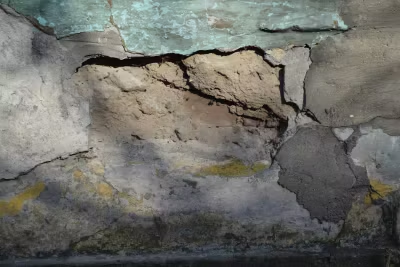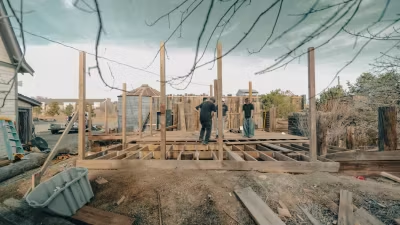
The pattern is unmistakable once you have seen it a few times. The deck or balcony looks normal from above — boards intact, railing tight, nothing obviously wrong. From below, or after the homeowner opens an inspection access panel inside the house, the story is different: dark staining along the rim joist behind the ledger board, soft and pulpy wood you can press a screwdriver into without resistance, rusted lag screws weeping orange streaks down the siding, and in advanced cases the unmistakable smell of a structural framing member that has been wet for years.
This is the most dangerous of the residential water-damage patterns I see in Colorado, because it is the only one that puts people in physical danger. A failed deck attachment can drop a loaded balcony or second-story deck onto whoever is below it. The cases I have worked typically involve a deck the homeowner believed was fine, attached to a house that looked fine from the curb, with a failure mode that an inspector with a moisture meter and a flashlight could have identified five years before the collapse.
If you suspect water intrusion at a deck or balcony, the legal picture in Colorado is straightforward enough to summarize in advance, and the actions that preserve a claim are time-sensitive.
How deck and balcony water damage actually happens
The vast majority of deck water-damage failures trace to one of three construction defects, often in combination:
Improper flashing at the ledger board. The ledger is the horizontal board that bolts the deck to the house framing. It must be flashed so that water running down the siding above it is directed out and away rather than trapped behind it. Done correctly, this means step flashing or membrane flashing integrated with the building's water-resistive barrier. Done incorrectly — sealant alone, no flashing, or flashing terminated above the wrong layer of the wall assembly — the ledger and the rim joist behind it stay wet every time it rains.
No drainage plane behind the cladding. When the wall finish above the deck is stucco, EIFS, or another cladding without a robust drainage plane, water that gets past the surface has nowhere to go but down — into the ledger pocket. This is a system-level defect, not a discrete one.
The damage that results is layered: ledger and rim-joist rot, sheathing rot, framing rot at the floor system, mold and mildew inside the wall cavity, and — when the rot reaches the attachment points — loss of the structural connection between the deck and the house. The deck does not announce its failure. It simply lets go.
What a homeowner can inspect on their own
A non-invasive inspection can tell you a great deal before any contractor or engineer is involved.
From the exterior, examine the area where the deck attaches to the house. Look for:
Staining streaks on the siding immediately below the ledger
Visible deterioration of the lag screws or bolt heads — particularly any rust streaking
Caulk or sealant that has cracked and pulled away from the wall
Any gap visible between the ledger and the siding behind it
From the underside of the deck, if accessible, look at the joist hangers, the ledger-to-house attachment, and the rim joist or beam the ledger is bolted into. Soft wood, fungal growth (white, brown, or black), and visible cracking along the grain are all indicators that the assembly is wet and has been for some time.
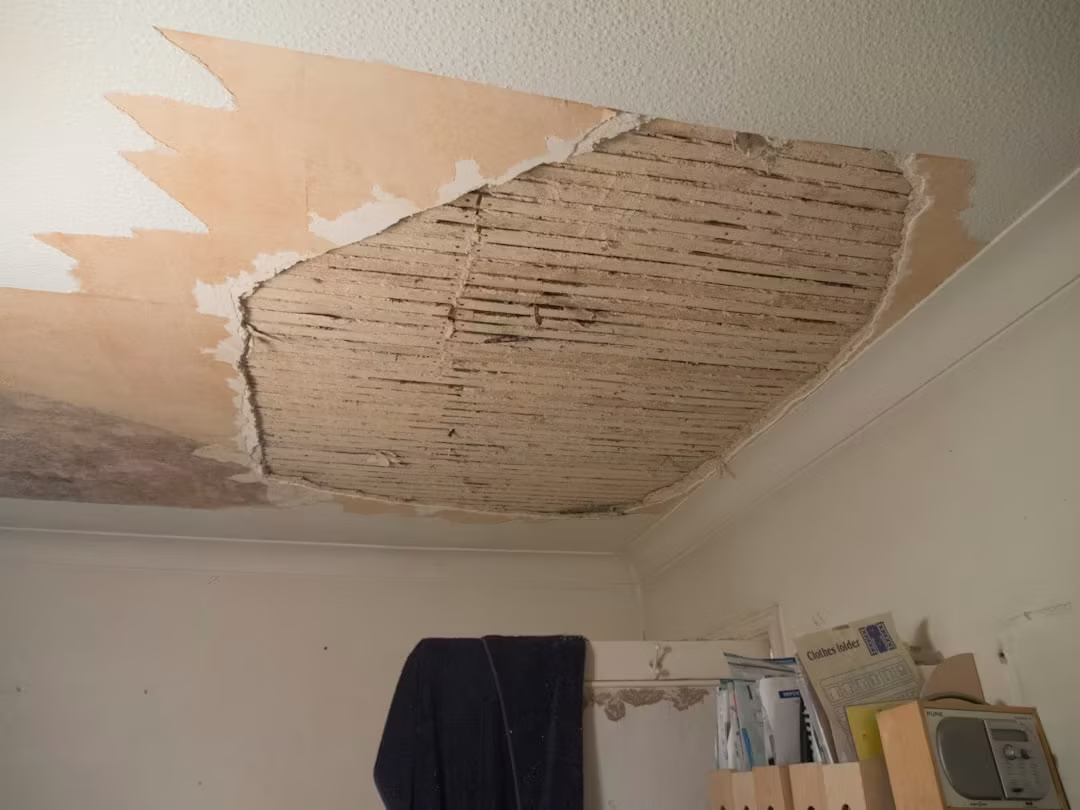
From inside the home, look at the wall and ceiling on the interior side of the deck attachment. Staining, peeling paint, bulged drywall, or musty smells inside that interior cavity often mean the ledger pocket has been wet long enough that water has migrated into the conditioned interior.
What you find on a homeowner-level inspection is not a substitute for professional evaluation, but it is enough to know whether to escalate.
Who is potentially liable
Liability for a defective deck or balcony depends on when the deck was built, how it was built, and who built it. The plausible defendants generally fall into a small number of categories:
The original builder of the deck, if the deck was part of original construction or a documented post-construction addition by an identifiable contractor. Claims against the builder run through the Construction Defect Action Reform Act, C.R.S. § 13-20-803.5, which imposes a pre-suit notice-of-claim procedure and gives the builder the opportunity to inspect and offer to repair.
The designer or engineer, if drawings exist and the defect is a design failure rather than an as-built workmanship failure.
The seller, if the deck condition was concealed or misrepresented at the time of sale. Colorado's Seller's Property Disclosure form requires sellers to disclose known defects in writing; a seller who answered "no known issues" while in fact aware of ongoing water staining or prior repairs faces fraudulent-concealment exposure independent of the original builder's liability.
A prior repair contractor, if someone has previously worked on the deck and the repair was itself defective.
For homeowners' associations and condominium balconies, an additional path exists through the HOA's responsibilities under the governing documents and the Colorado Common Interest Ownership Act. Common-element balconies are typically the association's responsibility to maintain, and association failure to maintain known water-intrusion issues is its own cause of action.
The time limits that decide most of these cases
Colorado's statutes of limitations and repose are the single most important factor in deck and balcony cases, because the damage often develops invisibly for years before the homeowner discovers it.
The relevant limits:
Two years from discovery — the general construction-defect statute of limitations under C.R.S. § 13-80-104(1)(a), running from the date the homeowner discovered or should have discovered the physical manifestation of the defect.
Six years from substantial completion — the statute of repose, also in § 13-80-104, which functions as an outer ceiling on construction-defect claims regardless of when the homeowner discovered the problem. (Limited extensions exist for defects manifesting in years five or six, but the statutory ceiling is firm.)
CDARA notice of claim — must be served on the builder before any lawsuit can be filed, and the builder then has tolling and inspection rights under § 13-20-803.5.
A homeowner who discovers staining behind a ledger eight years after the home was built has a time problem before they have a merits problem, regardless of how badly the deck was constructed. The repose period is short and unforgiving.
Four actions to preserve a deck water-damage claim
The actions worth taking the day you notice the staining or soft wood:
Document the condition. Photograph the staining, the lag screws, the underside of the ledger, and the interior wall behind it. Photographs with date stamps and a tape measure for scale carry weight in litigation that descriptions of the same condition do not.
Stop using the deck. This is liability advice and personal-safety advice at the same time. A deck that has reached visible-rot stage is at least suspect for structural failure; until a qualified engineer says it is safe to load, treat it as not.
Hire a qualified inspector or structural engineer for a non-invasive evaluation. A residential structural engineer with construction-defect experience can give you a report sufficient to anchor a CDARA notice or an insurance claim. A general home inspector usually cannot.
Identify and preserve the timeline. Pull the construction documents, the purchase contract, any prior inspection reports, the Seller's Property Disclosure form, and any communications you had with prior owners or contractors about the deck. The statute-of-limitations analysis turns on dates, and dates are recovered from documents, not from memory.
Acting on these four within the first thirty days of discovery — and ideally before deciding whom to sue or how — gives a homeowner the strongest evidentiary position for whatever claim eventually proves to be the right one.
Have Questions About Construction Defects?
Our experienced construction defect attorneys are here to help. Schedule a free 15-minute screening call to discuss your situation.