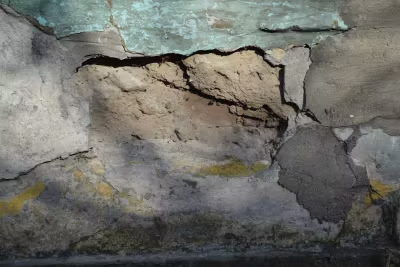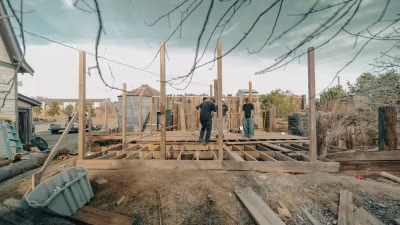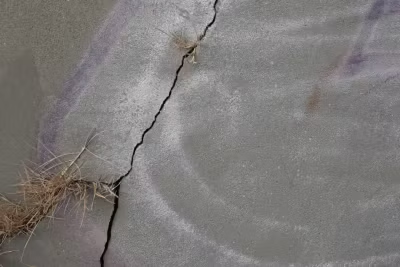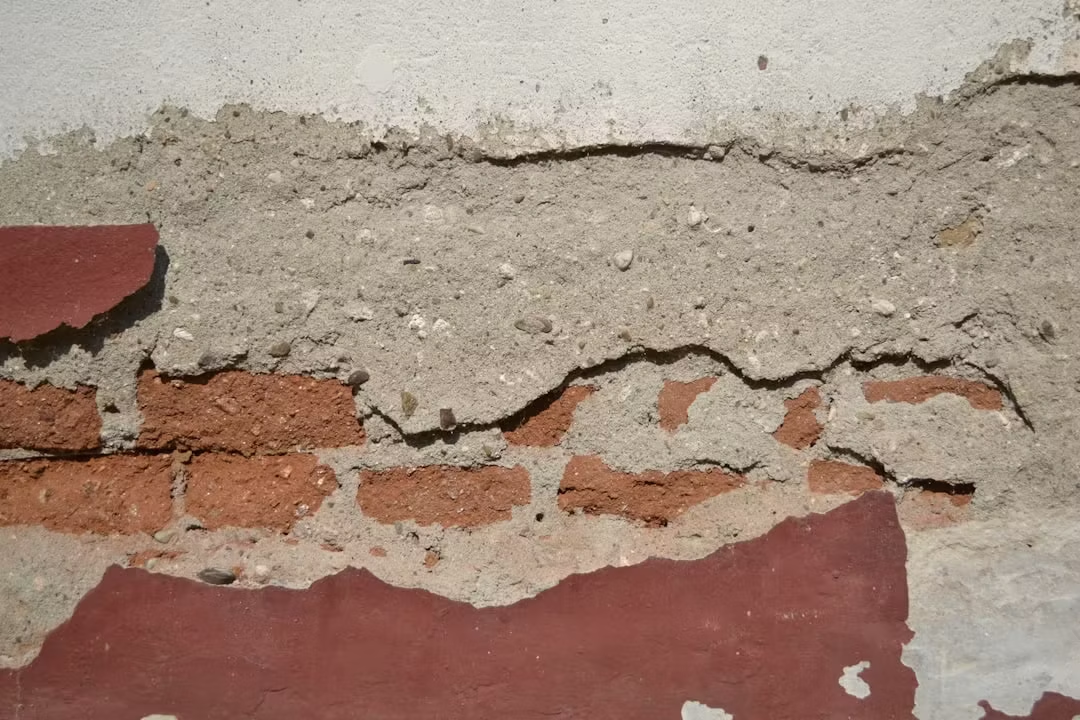
If you live in a homeowners association (HOA) or condominium community in Colorado and construction defects are discovered, you might be wondering whether your HOA can force you to pay for repairs. This is a common concern that many homeowners face, especially when they're dealing with expensive foundation issues, water intrusion, or other structural problems that weren't their fault.
The short answer is: it depends on your specific situation, the type of property you own, and what your HOA's governing documents say. Let's break down what you need to know about your potential financial responsibility when your HOA decides to pursue construction defect repairs. For a closer look at this issue, see our article "HOA Construction Defect Insurance Coverage Guide".
Understanding Your Property Type
The first step in determining your financial responsibility is understanding what type of property you own and how it's legally structured.
Condominiums: In a condominium, you typically own the interior of your unit, while the HOA owns the common elements like exterior walls, roofs, foundations, and shared amenities. When construction defects affect these common elements, the HOA is generally responsible for repairs, and all unit owners typically share in the cost.
Townhomes and Single-Family Homes in HOAs: The ownership structure here can vary significantly. You might own your entire building and lot, or you might own your unit while the HOA owns certain exterior elements. Your deed and HOA documents will spell out these details.
Planned Communities: In these developments, homeowners usually own their individual lots and homes, while the HOA maintains common areas like parks, clubhouses, and sometimes shared infrastructure.
How HOAs Can Require Payment for Repairs
HOAs have several mechanisms they can use to collect money from homeowners for construction defect repairs:
Special Assessments
The most common way HOAs fund major repairs is through special assessments. These are one-time charges levied against all homeowners to cover specific expenses beyond what regular dues can handle. If your HOA discovers construction defects that need immediate repair, they may vote to impose a special assessment to cover the costs.
Your HOA's governing documents (typically the CC&Rs - Covenants, Conditions & Restrictions) will outline the process for imposing special assessments, including:
Whether a board vote or membership vote is required
How much notice you must receive
Whether payment plans are available
What happens if you don't pay
Increased Monthly Dues
Some HOAs may choose to increase regular monthly or annual dues to build up reserves for construction defect repairs or to pay for ongoing repair costs over time.
Loans and Financing
Your HOA might take out a loan to fund immediate repairs, then spread the repayment cost among homeowners through increased dues or special assessments over several years.
Your Legal Protections in Colorado
Colorado law provides some important protections for individual homeowners when it comes to construction defect liability.
Limited Liability for Condo Owners
Under Colorado Revised Statutes § 38-33-109, if you own a condominium unit, your personal liability for construction defect damages is limited to your percentage ownership in the common elements. This means if you own a unit that represents 2% of the total ownership in the building, your maximum liability would be 2% of any damages or settlement amount.
This is an important protection because it prevents the HOA from making you personally responsible for more than your fair share of any construction defect costs.
Rights Under Construction Defect Laws
Colorado's construction defect statutes, including C.R.S. § 13-20-804, establish when and how construction defect claims can be pursued. These laws can work in your favor because they may help your HOA recover costs from the original builder, developer, or their insurance companies, potentially reducing or eliminating your out-of-pocket costs.
When You Might Not Have to Pay
There are several situations where you might not be responsible for construction defect repair costs:
Insurance Coverage
Your HOA's insurance policy might cover construction defects, especially if they've caused water damage or other covered perils. Additionally, if the builder or developer is still in business, their insurance might cover the repairs. Understanding insurance coverage for construction defects can be crucial to minimizing homeowner costs.
Successful Legal Claims
If your HOA successfully sues the builder, developer, subcontractors, or others responsible for the construction defects, the recovered funds might cover all repair costs without requiring homeowner contributions. Many HOA construction defect lawsuits result in settlements or judgments that fully fund necessary repairs.
Warranty Coverage
Depending on when your home was built, various warranties might still be in effect that could cover construction defect repairs without cost to homeowners.
What to Do If Your HOA Demands Payment
If your HOA is asking you to pay for construction defect repairs, here's what you should do:
Review Your HOA Documents
Carefully read your CC&Rs, bylaws, and any other governing documents to understand:
What areas the HOA is responsible for maintaining
The process for special assessments
Your voting rights on major expenditures
Any limits on the HOA's authority to impose costs
Ask Questions
Don't hesitate to ask your HOA board:
What specific defects need repair
Whether insurance claims have been filed
Whether legal action against responsible parties is being considered
How the repair costs were calculated
What alternatives to immediate payment might be available
Get Independent Advice
Consider consulting with a construction defect attorney who can:
Review your HOA documents
Assess whether the HOA is following proper procedures
Determine if you have valid defenses to paying
Advise you on your rights and options
Understand Your Timeline
Construction defect claims are subject to statutes of limitations, so time can be critical. If your HOA is rushing to collect money for repairs without first exploring insurance coverage or legal claims against responsible parties, this could be a red flag.
Factors That Affect Your Responsibility
Several factors will influence whether and how much you might have to pay:
Age of Your Property: Newer properties may still be covered by warranties or have viable claims against builders and developers.
Type and Extent of Defects: Some defects are more clearly covered by insurance or more likely to result in successful legal claims.
HOA's Financial Situation: An HOA with adequate reserves might be able to fund repairs without special assessments, at least initially.
Governing Document Provisions: Your specific HOA documents might contain provisions that limit or expand your financial responsibility.
The Importance of Acting Quickly
If your HOA is considering construction defect repairs, time is often of the essence. Insurance policies have reporting requirements, legal claims have deadlines, and evidence of defects can deteriorate over time. The sooner your HOA acts to protect everyone's interests, the better the chances of minimizing costs to individual homeowners.
Working Together for the Best Outcome
Remember that your HOA board members are fellow homeowners who generally want to minimize costs for everyone. Open communication and cooperation often lead to better outcomes than adversarial relationships. However, this doesn't mean you should blindly accept any payment demands without understanding your rights and options.
Get Professional Help
Construction defect cases involving HOAs can be complex, involving multiple areas of law including real estate, construction, insurance, and HOA governance. The interplay between these different legal areas, combined with the significant financial stakes involved, makes professional legal advice essential.
If your HOA is demanding payment for construction defect repairs, don't navigate this situation alone. An experienced Colorado construction defect attorney can help you understand your rights, evaluate your options, and work toward the best possible outcome for your situation. Contact our office today for a consultation to discuss your specific circumstances and learn how we can help protect your interests.
Have Questions About Construction Defects?
Our experienced construction defect attorneys are here to help. Schedule a free 15-minute screening call to discuss your situation.