Colorado homeowners face unique challenges when it comes to foundation problems due to the state's expansive clay soils, extreme weather patterns, and high altitude conditions. Foundation defects can range from minor settling issues to major structural problems that threaten your home's safety and value. Understanding the types of foundation problems common in Colorado, their causes, and your legal rights is crucial for protecting your investment and ensuring your family's safety.
This comprehensive guide explains the most common foundation issues affecting Colorado homes, what causes these problems, your warranty protections, legal rights under state law, and the steps you should take if you discover foundation defects. Whether you're dealing with basement water damage, visible cracks, or settling issues, knowing your options and deadlines can make the difference between a successful resolution and costly out-of-pocket repairs.
Common Foundation Problems in Colorado Homes
Colorado's unique environmental conditions create specific challenges for home foundations that homeowners should understand. The state's expansive clay soils, dramatic temperature swings, and freeze-thaw cycles contribute to several types of foundation defects that can develop over time.
Types of Foundation Defects
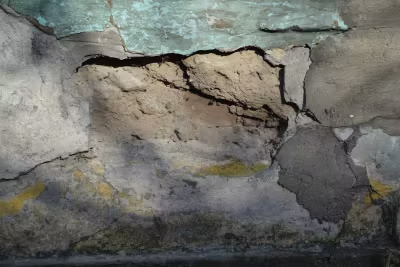
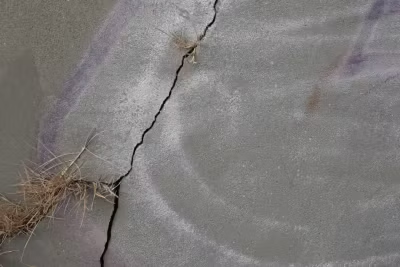
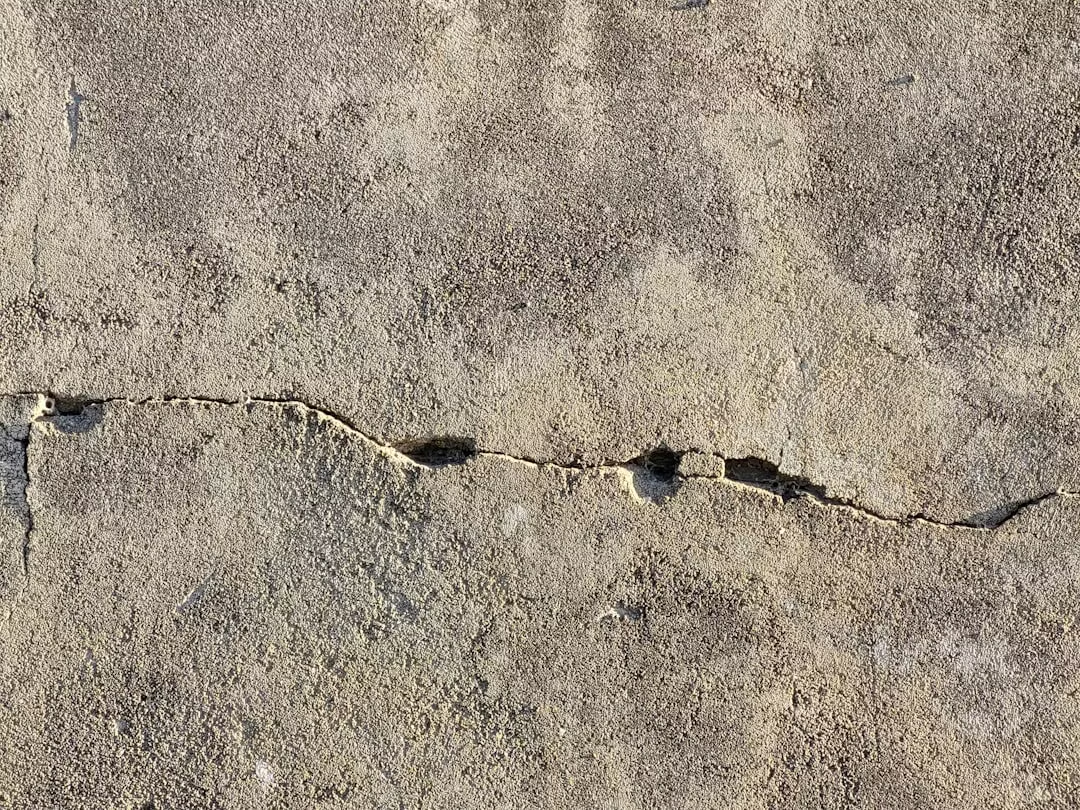
Foundation Cracks are among the most visible signs of structural problems. These can appear as hairline cracks in basement walls, stair-step patterns in block foundations, or horizontal cracks that indicate serious pressure issues. Vertical cracks often result from normal settling, while horizontal or diagonal cracks may signal more serious structural concerns.
Foundation Settlement occurs when the soil beneath your home shifts or compresses unevenly. This can cause one section of your house to sink lower than others, creating gaps around windows and doors, sloping floors, or visible separation between the foundation and walls.
Water Intrusion problems manifest as basement flooding, persistent moisture, or water seepage through foundation walls. Colorado's clay soils can create drainage issues that direct water toward your foundation rather than away from it.
Why Colorado's Environment Damages Foundations
Colorado's clay-rich soils expand dramatically when wet and shrink when dry. This constant expansion and contraction puts tremendous pressure on foundation walls and can cause cracking, shifting, and settlement over time. During wet seasons, the soil pushes against foundation walls; during dry periods, it pulls away, leaving foundations unsupported.
The state's freeze-thaw cycles compound these problems. When water in the soil freezes, it expands with incredible force. As temperatures warm, the ice melts and leaves gaps where the soil has shifted. This cycle repeats hundreds of times each year, gradually compromising foundation integrity.
Warning Signs to Watch For
Homeowners should monitor for several key indicators of foundation problems. Visible cracks in basement walls, especially those wider than a quarter-inch or showing signs of recent movement, require immediate attention. Doors and windows that suddenly stick or won't close properly often indicate foundation shifting.
Water in your basement after storms, persistent musty odors, or white mineral deposits on foundation walls signal water intrusion problems. Sloping floors, gaps between walls and ceilings, or cracks in drywall throughout the house can indicate serious settlement issues.
What Causes Foundation Defects in Colorado Construction?
Understanding the root causes of foundation problems helps homeowners identify whether their issues stem from construction defects or natural environmental factors. Construction-related foundation problems often result from poor workmanship, inadequate materials, or failure to account for Colorado's challenging soil conditions.
Poor Soil Preparation and Inadequate Compaction
Many foundation problems begin during the construction phase when builders fail to properly prepare the building site. Inadequate soil compaction beneath foundations can lead to uneven settling as the loose soil gradually compresses under the home's weight. This is particularly problematic in Colorado, where clay soils must be carefully managed during construction. For a closer look at this issue, see our article "Colorado Builder Cure Period".
Builders may also fail to conduct proper soil tests before construction, leading to inappropriate foundation designs for the specific soil conditions. Different areas of Colorado have varying soil compositions, from expansive clay to sandy soils, each requiring different construction approaches.
Improper Drainage and Waterproofing Installation
Foundation water damage often results from poor drainage design or inadequate waterproofing during construction. Builders may install insufficient drainage systems, grade the lot incorrectly, or use substandard waterproofing materials that fail prematurely.
Proper drainage requires directing water away from the foundation through grading, gutters, downspouts, and sometimes subsurface drainage systems. When these elements are poorly designed or installed, water accumulates around the foundation, leading to hydrostatic pressure, soil expansion, and eventual water intrusion.
Building Code Violations and Substandard Materials
Some foundation problems result from builders cutting corners by using inferior materials or violating building codes. Under C.R.S. § 13-20-804, negligence claims for construction defects may be asserted when "the failure to substantially comply with building codes or industry standards results in actual damage to real or personal property, actual loss of use of real or personal property, or bodily injury or wrongful death."
This might include using concrete with insufficient strength ratings, inadequate rebar installation, or foundation designs that don't meet local building requirements for Colorado's climate conditions.
Environmental Factors Unique to Colorado
Colorado's high altitude affects concrete curing and can lead to foundation problems if not properly managed during construction. The thin air and intense UV exposure can cause concrete to cure too quickly, leading to cracking and reduced strength.
The state's dramatic temperature swings - sometimes 40 degrees or more in a single day - create expansion and contraction stresses that foundations must be designed to handle. When builders fail to account for these conditions through proper expansion joints and materials selection, foundation problems often develop within the first few years after construction.
Are Foundation Problems Covered Under Warranty?
Understanding warranty coverage for foundation defects requires distinguishing between different types of warranties and carefully reviewing what's included and excluded from coverage. Colorado law provides specific protections for homeowners while also establishing requirements for warranty claims.
Builder Warranties vs Home Warranty Service Contracts
Builder warranties typically cover structural defects, including foundation problems, for a specific period after construction completion. These warranties are part of your purchase contract and generally provide broader coverage for foundation issues than home warranty service contracts.
Home warranty service contracts, regulated under C.R.S. § 12-10-903, operate a bit differently. The statute requires that "every home warranty service contract shall contain a specific listing of all items or elements excluded from coverage." Foundation repairs are commonly excluded from these service contracts, which typically focus on mechanical systems and appliances rather than structural elements.
What Foundation Issues Are Typically Excluded
Most warranties exclude foundation problems caused by normal settling, environmental factors beyond the builder's control, or homeowner negligence. However, they typically cover foundation defects resulting from construction errors, material defects, or workmanship failures.
Water intrusion may be covered if it results from construction defects, but warranties often exclude damage caused by poor maintenance, landscaping changes, or external water sources. Understanding these distinctions is crucial for determining whether your specific foundation problem qualifies for warranty coverage.
Proper Notification Requirements
Colorado law establishes specific requirements for warranty claim notifications. Under CJI-Civil 14:15, "a plaintiff cannot recover for breach of warranty unless they notified the defendant of the breach within a reasonable time after the plaintiff discovered or should have discovered the breach." The instruction notes that "notice of breach of warranty may be oral or written" and "no particular form of notice is required as long as it informs the defendant of the breach."
However, written notice is always preferable as it creates a clear record of when you notified the builder. Your notice should describe the foundation problem specifically, include photographs if possible, and request an inspection and repairs under the warranty terms.
Timeline Requirements Under Colorado Law
Warranty claims must be made within the warranty period specified in your contract, but the discovery rule often applies to foundation defects. Since foundation problems may not become apparent immediately, the warranty period typically begins when you discover or should have reasonably discovered the defect, not necessarily from the home's completion date.
For construction defect claims that extend beyond warranty coverage, different timelines apply under Colorado's Construction Defect Action Reform Act, which we'll discuss in detail below.
Your Legal Rights for Foundation Construction Defects
When foundation problems result from construction defects rather than normal wear or environmental factors, Colorado homeowners have several legal remedies available. Understanding when foundation issues qualify as actionable construction defects and the required procedures is essential for protecting your rights.
When Foundation Problems Qualify as Construction Defects
Under Colorado law, foundation problems constitute construction defects when they result from failures to meet applicable building standards or industry practices. The Colorado General Assembly established in C.R.S. § 13-20-802 that "changes in the law are necessary and appropriate concerning actions claiming damages, indemnity, or contribution in connection with alleged construction defects" while "preserving adequate rights and remedies for property owners."
Foundation defects typically qualify as actionable construction defects when they stem from inadequate design, poor workmanship, substandard materials, or failure to follow building codes. Simple cosmetic cracks or minor settling that doesn't affect structural integrity usually doesn't rise to the level of a legal construction defect.
Required Notice Procedures
Colorado's Construction Defect Action Reform Act establishes specific notice requirements before homeowners can file lawsuits. Under C.R.S. § 13-20-803, "in every action brought against a construction professional, the claimant shall file with the court or arbitrator and serve on the construction professional an initial list of construction defects."
This initial list "shall contain a description of the construction that the claimant alleges to be defective" and is "in addition to the notice of claim required by section 13-20-803.5." These notice requirements give builders an opportunity to inspect the claimed defects and potentially resolve issues without litigation.
Breach of Contract vs Negligence Claims
Homeowners can typically pursue foundation defect claims under both breach of contract and negligence theories, depending on the circumstances. Contract claims focus on whether the builder failed to meet the terms of your construction agreement or applicable warranties.
However, C.R.S. § 13-20-804 limits negligence claims, stating that "no negligence claim seeking damages for a construction defect may be asserted if the claim arises from failure to construct an improvement to real property in substantial compliance with an applicable building code or industry standard." The statute creates an exception allowing negligence claims when code violations result in actual property damage, loss of use, or personal injury.
Consumer Protection Act Violations
When builders engage in deceptive practices related to foundation construction, homeowners may have claims under the Colorado Consumer Protection Act (CCPA). Under CJI-Civil 29:1, to recover under the CCPA, plaintiffs must prove "that defendant engaged in or caused another to engage in a deceptive trade practice" that "occurred in the course of defendant's business, vocation, or occupation." The plaintiff must further show that the deceptive trade practice "significantly impacted" the public or has the potential to do so. CCPA violations can provide enhanced remedies beyond standard contract damages, though they are traditionally difficult to prove.
How Long Do You Have to File a Foundation Defect Claim?
Understanding Colorado's statute of limitations for foundation defect claims is crucial because missing these deadlines can permanently bar your right to recover damages. The timing rules for construction defects involve complex considerations about when problems are discovered versus when construction was completed.
Colorado's Statute of Limitations for Construction Defects
Colorado's Construction Defect Action Reform Act establishes specific limitation periods for construction defect claims that differ from general civil claims. The Broomfield Senior Living case illustrates how these timelines work, noting that "CDARA links the accrual of construction defect claims to their discovery" while traditional contract limitations "expired independent of when the acts or failures to act were discovered."
This discovery rule is particularly important for foundation defects, which may not become apparent for several years after construction. The statute recognizes that homeowners shouldn't lose their rights simply because foundation problems weren't immediately visible.
When the Clock Starts Ticking
For foundation defect claims, the limitation period typically begins when you discover or reasonably should have discovered the defect, not when construction was completed. This discovery rule protects homeowners from losing their rights due to latent defects that develop over time.
However, determining when you "should have discovered" a defect can be complex. Courts consider whether a reasonable homeowner would have noticed the problem earlier, taking into account factors like the visibility of the defect, whether professional inspection was required to identify it, and your actual knowledge of construction issues.
Special Rules for Latent Defects
Foundation settlement and structural issues often qualify as latent defects because they may not manifest symptoms for years after construction. Colorado law provides specific protections for these hidden defects, allowing homeowners to pursue claims even when significant time has passed since construction completion.
The key is establishing when the defect became reasonably discoverable. For foundation problems, this might be when you first notice doors sticking, cracks appearing, or water intrusion issues, rather than when the underlying structural problem initially developed.
Why Early Action Protects Your Rights
Even though discovery rules may extend your deadline, taking prompt action when you first notice foundation problems is crucial. Timely reporting requirements under Colorado law mean that delays in notifying builders or contractors can limit your remedies even if the statute of limitations hasn't expired.
Early action also helps preserve evidence, prevents further damage, and demonstrates that you took reasonable steps to mitigate your losses. Insurance coverage and warranty protections may also be time-sensitive, making prompt notification essential for maximizing your recovery options.
What Damages Can You Recover for Foundation Problems?
When foundation defects result from construction errors, Colorado homeowners can recover various types of damages, but the law imposes certain limitations on what you can claim. Understanding these damage categories helps you evaluate your case's potential value and ensure you're seeking all available compensation.
Actual Repair Costs and Engineering Assessments
The primary damages for foundation defects are the actual costs necessary to repair the problems. This includes engineering assessments to determine the scope of necessary repairs, excavation costs, foundation repair or replacement, and restoration of landscaping or other property disturbed during repairs.
Under C.R.S. § 13-20-806, "a construction professional otherwise liable shall not be liable for more than actual damages, unless the claimant prevails on a claim that a violation of the Colorado Consumer Protection Act has occurred." This limitation emphasizes the importance of documenting all repair costs and obtaining professional estimates for the work needed.
Repair costs must be reasonable and necessary to address the specific defects. Courts won't award damages for upgrades or improvements beyond what's needed to fix the construction defects, but you can recover costs for repairs that meet current building standards even if they exceed the original construction quality.
Temporary Housing During Foundation Repairs
When foundation repairs require you to vacate your home temporarily, you can typically recover reasonable temporary housing costs. This might include hotel expenses, rental housing, or additional costs for meals and other necessities during the repair period.
These damages must be directly related to the foundation repair work and limited to the time reasonably necessary to complete repairs. Documentation of these expenses is crucial, as courts require proof that temporary housing was necessary due to the foundation work rather than personal preference.
Property Value Loss from Foundation Defects
Foundation problems can significantly impact your home's market value, even after repairs are completed. You may be able to recover the difference between your home's value with and without the foundation defects, typically established through professional appraisals.
However, proving permanent value loss can be challenging, especially if repairs fully address the structural issues. Expert testimony from qualified real estate appraisers is usually necessary to establish that foundation problems have created lasting value impacts beyond the repair costs.
Damage Limitations Under Colorado Law
Colorado's construction defect statutes limit certain types of damages to encourage resolution while protecting homeowners' essential rights. The limitation on damages beyond actual costs only applies in specific circumstances and doesn't prevent recovery of legitimate repair expenses and related costs.
For construction defect damages in Colorado, the key is understanding what qualifies as "actual damages" versus consequential or punitive damages. CJI-Civil 29:5 notes that while Colorado case law doesn't definitively define "actual damages" under the Consumer Protection Act, homeowners can typically recover direct costs caused by the defects.
Steps to Take When You Discover Foundation Problems
Taking the right steps immediately after discovering foundation defects can significantly impact your ability to recover damages and protect your legal rights. The actions you take in the first few weeks and months after discovering problems often determine the success of warranty claims or legal actions.
Document the Defects with Photos and Professional Inspections
Begin documenting foundation problems immediately with detailed photographs showing the extent and location of all defects. Take photos from multiple angles, include reference objects for scale, and photograph the same areas over time to document whether problems are worsening.
Consider hiring a structural engineer or foundation specialist to conduct a professional inspection and provide a written report. This professional documentation serves as crucial evidence if you need to pursue warranty claims or legal action. The inspection report should identify the likely causes of the foundation problems and recommend appropriate repairs.
Keep detailed records of when you first noticed each problem, how the issues have progressed, and any temporary measures you've taken to prevent further damage. This timeline can be important for statute of limitations and warranty claim purposes.
Notify Your Builder or Contractor in Writing
Send written notice to your builder, general contractor, and any relevant subcontractors describing the foundation problems and requesting inspection and repairs. Include your documentation and photographs with this notice to provide a complete picture of the defects
Have Questions About Construction Defects?
Our experienced construction defect attorneys are here to help. Schedule a free 15-minute screening call to discuss your situation.