If you're a Colorado homeowner dealing with cracks in your foundation, uneven floors, or concrete slabs that seem to be moving or settling, you may be facing serious construction defects that could affect both your home's value and your family's safety. Understanding your legal rights and the unique challenges of building on Colorado's expansive soils is crucial for protecting your investment.
What Are Concrete Construction Defects?
Concrete defects in residential construction can affect your home's foundation, basement walls, garage slabs, driveways, and other concrete elements. Under Colorado law, a defect is broadly defined as an irregularity that causes weakness, failure, or spoils the structure's integrity. These defects can range from cosmetic issues to serious structural problems that threaten your home's stability.
Common concrete defects include:
Foundation settlement and cracking - When foundations sink unevenly or develop significant cracks
Slab movement and heaving - Concrete floors that buckle, crack, or separate from walls
Water intrusion through concrete - Basement walls that allow moisture penetration
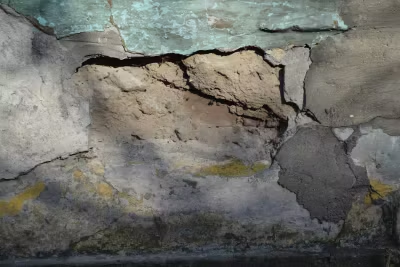
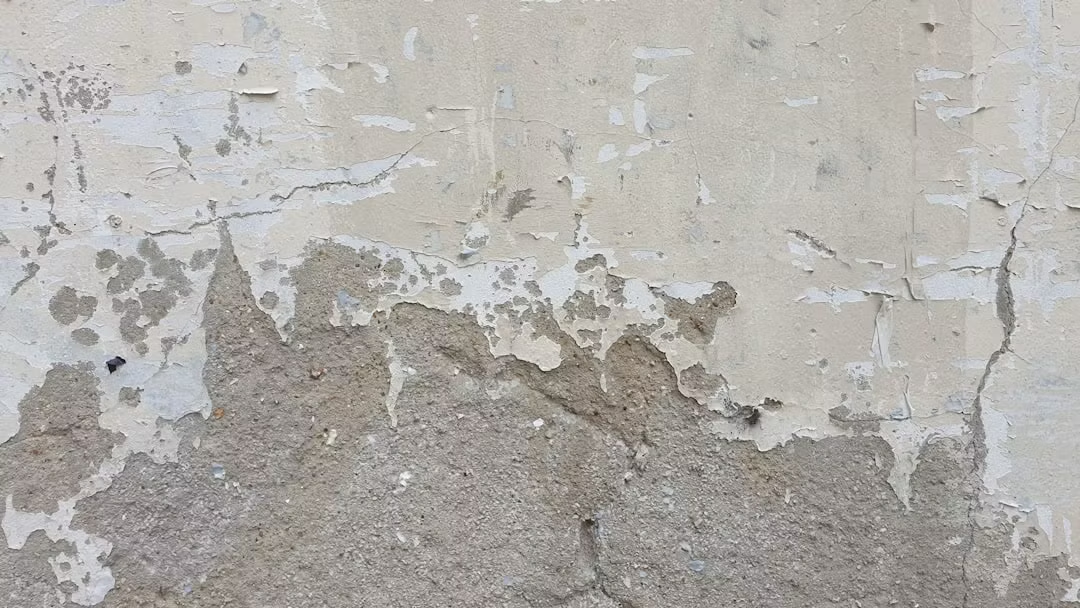
Spalling and deterioration - Surface concrete that chips, flakes, or crumbles
Differential movement - When different parts of the concrete structure move at different rates
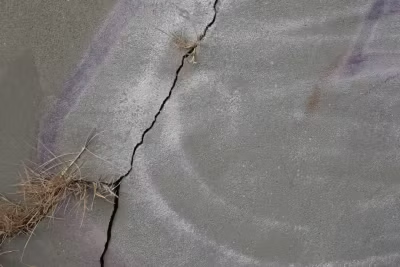
It's important to understand that not every crack indicates a defect. Perfectly poured concrete slabs and foundation walls typically develop hairline cracks and exhibit some spalling over time. The key is distinguishing between normal settling and cracking versus defects that indicate structural problems or code violations.
Colorado's Expansive Soil Challenge
Colorado's unique soil conditions create particular challenges for concrete construction. Much of the Front Range sits on expansive clay soils that shrink and swell dramatically with changes in moisture content. This natural characteristic can put enormous pressure on foundations and slabs, leading to serious structural problems if not properly addressed during construction.
Legal experts have noted a concerning trend: many builders and engineers have not adequately studied the long-term performance of their foundation and slab designs on Colorado's challenging soils. Post-tensioned slabs (PT-slabs), which have become increasingly common since 2000, present particular concerns. These designs, often created for use in other states, may not be appropriate for Colorado's specific soil conditions, climate, and landscaping practices.
The problem often becomes apparent years after construction when nearby lot development increases soil moisture content through irrigation and surface capping. This additional moisture can trigger damaging water pressures in expansive soils, leading to foundation and slab failures that may not appear until 10 to 20 years after your home was built.
Your Legal Rights Under Colorado Law
Colorado has specific laws governing construction defect claims that protect homeowners while establishing procedures that must be followed. Understanding these rights is essential if you're dealing with concrete defects.
When You Can Sue for Negligence
Under the Construction Defect Action Reform Act (CDARA), specifically C.R.S. § 13-20-804, you can bring negligence claims against construction professionals for concrete defects if the failure results in:
Actual damage to your real or personal property
Actual loss of use of your property
Bodily injury or wrongful death
A risk of bodily injury or death, or a threat to the life, health, or safety of occupants
This means that merely having concrete work that doesn't meet building codes isn't enough for a negligence claim unless it causes one of these specific types of harm. However, you may still have other legal options, including breach of contract or warranty claims.
Contract and Warranty Protection
Even if you can't prove negligence, you may have strong contract or warranty claims. C.R.S. § 13-20-804(2) specifically preserves your right to assert contract and warranty claims regardless of whether the negligence requirements are met. These claims can be powerful tools for recovering damages related to concrete defects.
Time Limits for Filing Claims
Colorado has strict time limits for construction defect claims under C.R.S. § 13-80-104. Generally, you must file your lawsuit within six years of substantial completion of your home's construction. However, the clock doesn't start ticking until you discover (or reasonably should have discovered) the physical manifestations of the defect.
This "discovery rule" can be complex with concrete defects. You're not required to file suit the moment you notice minor cracks, but you should document problems and monitor them for changes. If hairline cracks begin expanding significantly or new movement occurs, this could trigger the statute of limitations.
Required Pre-Lawsuit Procedures
Before filing a construction defect lawsuit in Colorado, you must follow specific notice procedures under C.R.S. § 13-20-803.5. This includes:
Providing written notice to the construction professional at least 75 days before filing suit (for residential property)
Allowing the contractor opportunity to inspect the alleged defects
Participating in good faith in settlement discussions
Additionally, C.R.S. § 13-20-803 requires you to file a detailed list of construction defects with the court within 60 days of starting your lawsuit. This list can be amended as new defects are discovered, but the case cannot proceed to trial without it.
Identifying When Normal Becomes Problematic
Determining when concrete issues cross the line from normal settling to actionable defects requires careful observation and often professional evaluation. Monitor these warning signs:
Foundation Issues:
Cracks wider than 1/4 inch or that continue to grow
Horizontal cracks in foundation walls
Doors and windows that stick or won't close properly
Visible separation between the foundation and frame
Water intrusion during rain or snow melt
Slab Problems:
Floors that are noticeably uneven or sloping
Cracks that allow air or moisture penetration
Separation between slabs and walls
Tiles or flooring that crack due to substrate movement
Exterior Concrete:
Driveways or walkways that slope toward the house
Significant settling or heaving of concrete surfaces
Cracks that compromise structural integrity
Remember, the key legal question isn't whether the concrete is perfect, but whether defects in design or construction have created conditions that cause actual damage or pose safety risks.
Steps to Protect Your Rights
If you suspect concrete defects in your home:
Document Everything: Take photographs showing the progression of cracks or movement over time. Keep records of any water intrusion, sticking doors, or other symptoms.
Get Professional Evaluation: A structural engineer familiar with Colorado soil conditions can help determine whether problems indicate construction defects or normal settling.
Preserve Evidence: Don't make repairs that might eliminate evidence of defects before consulting with an attorney. Courts have noted that repairing defects before the contractor has a chance to inspect them can complicate your legal options.
Act Promptly: While you don't need to rush to file suit over minor cracks, don't wait too long if problems are clearly worsening. The six-year statute of repose provides an absolute deadline regardless of when you discover problems.
Understand Your Coverage: Review your homeowner's insurance policy and any builder warranties. Some concrete problems may be covered, while others may be specifically excluded.
For more information about identifying construction defects throughout your home, see our guide on how to spot construction defects in your home.
The Importance of Professional Legal Guidance
Colorado's construction defect laws are complex and technical. The interplay between negligence restrictions, contract rights, notice requirements, and time limits requires careful navigation. Additionally, concrete defect cases often involve technical engineering issues related to Colorado's unique soil conditions that require expert analysis.
Many construction defect cases involve multiple parties - general contractors, subcontractors, engineers, and suppliers - each with different levels of responsibility and insurance coverage. Determining the best legal strategy requires understanding not just what went wrong, but who should be held accountable and how to maximize your recovery.
If you're dealing with foundation settling, slab movement, or other concrete defects in your Colorado home, don't try to navigate these complex legal waters alone. The sooner you understand your rights and options, the better you can protect your home and your investment.
Contact an experienced Colorado construction defect attorney today for a consultation about your specific situation. Time limits apply, and early action can make the difference between a successful recovery and lost rights.
Have Questions About Construction Defects?
Our experienced construction defect attorneys are here to help. Schedule a free 15-minute screening call to discuss your situation.