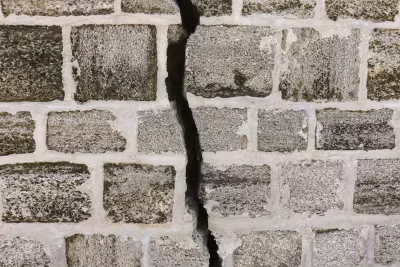
If you've discovered potential construction defects in your Colorado home or building, understanding the state's statute of repose is critical to protecting your legal rights. This comprehensive guide explains Colorado's construction defect statute of repose laws, including crucial time limits, exceptions, and how these laws may impact your ability to file a successful claim.
What is Colorado's Construction Defect Statute of Repose?
Definition and Purpose: Statute of Repose vs. Statute of Limitations
Colorado's construction defect statute of repose serves as an absolute deadline for filing construction defect claims. This law is distinct from the more commonly understood statute of limitations.
While a statute of limitations typically begins running when a defect is discovered or should have been discovered, the statute of repose creates a hard cutoff date regardless of when defects are actually found.
The primary purpose of the statute of repose is to provide certainty and finality to the construction industry. After the repose period expires, contractors, architects, engineers, and other construction professionals gain immunity from most construction defect lawsuits, even if defects haven't been discovered yet.
C.R.S. § 13-80-104 Provisions and Absolute Time Limits
Colorado's construction defect statute of repose is codified in C.R.S. § 13-80-104. This statute establishes strict time limits for bringing construction-related claims and creates an absolute bar to most construction defect lawsuits after a specified period.
The statute applies broadly to claims against:
Contractors and subcontractors
Architects and engineers
Other construction professionals involved in design, planning, supervision, or construction
This comprehensive coverage ensures that virtually all parties in the construction chain benefit from repose protection.
How It Protects Contractors and Construction Professionals
The statute of repose serves multiple protective functions for construction industry participants:
Financial Security: Allows construction professionals to close their books on completed projects after the repose period expires
Insurance Benefits: Enables more predictable insurance coverage and premium calculations
Business Planning: Provides certainty for long-term business planning and risk assessment
Document Retention: Establishes clear timelines for how long construction records must be maintained
Key Differences from Other States' Statutes of Repose
Colorado's approach to construction defect statutes of repose differs from many other states in several important ways:
Time periods: Colorado's repose periods may vary from the standard periods used in other jurisdictions
Trigger events: The specific events that start the repose period running may differ from other states
Exception provisions: Colorado has unique exceptions and extension mechanisms not found in all states
Integration with other laws: Colorado's statute works in conjunction with specific construction defect mitigation statutes
Time Limits and Deadlines Under Colorado Law
Standard Repose Period for Construction Defect Claims
Under Colorado law, the standard repose period for construction defect claims creates a firm deadline after which most construction-related lawsuits cannot be filed. This period is designed to balance the rights of property owners to seek redress for defects against the need to provide construction professionals with reasonable protection from indefinite liability.
The repose period applies regardless of when defects are discovered. Unlike construction defect statutes of limitations that may be extended by late discovery, the statute of repose typically provides no such flexibility.
When the Statute of Repose Period Begins to Run
Determining when the repose period begins is critical for both property owners and construction professionals. The triggering event establishes the baseline from which the absolute deadline is calculated.
The commencement date affects all subsequent legal strategy and timing decisions. Property owners must work backward from the repose deadline to ensure adequate time for investigation, expert evaluation, and potential litigation preparation.
Substantial Completion vs. Certificate of Occupancy Triggers
Colorado law recognizes different potential trigger events for starting the repose period:
Substantial Completion: This occurs when the construction work reaches the point where the owner can occupy or utilize the property for its intended purpose, even if minor work remains incomplete. This standard focuses on functional completion rather than perfect completion.
Certificate of Occupancy: This represents the formal governmental approval allowing occupancy of the completed structure. This trigger provides a more definitive date but may not align with when construction is actually substantially complete.
The choice between these triggers can significantly impact the repose deadline, making proper documentation and legal analysis essential for determining which standard applies in specific cases.
Impact of C.R.S. § 13-20-805 on Limitation Periods
C.R.S. § 13-20-805 provides important modifications to standard limitation periods in construction defect cases. According to the statute, if an alleged construction defect is being mitigated pursuant to section 13-20-803.5, the statute of limitations or repose may be extended to account for the mitigation process timeline.
This provision recognizes that Colorado's construction defect mitigation procedures may consume significant time, potentially prejudicing property owners who engage in good-faith mitigation efforts. The extension helps ensure that the mitigation process doesn't inadvertently bar otherwise valid claims.
Exceptions and Extensions to the Statute of Repose
Mitigation Process Under C.R.S. § 13-20-803.5 and Time Extensions
Colorado's construction defect mitigation statute, C.R.S. § 13-20-803.5, requires property owners to provide notice to construction professionals before filing certain construction defect lawsuits. This process includes opportunities for inspection, repair estimates, and potential resolution outside of formal litigation.
When property owners comply with mitigation requirements, C.R.S. § 13-20-805 provides that the statute of limitations or repose is extended to prevent the mitigation process from consuming time that property owners need to pursue legal remedies.
The mitigation process can involve:
Formal notice to potentially responsible parties
Inspection periods allowing construction professionals to evaluate claimed defects
Opportunities for repair offers or monetary settlements
Structured timelines for responses and negotiations
Fraudulent Concealment Exceptions and Discovery Rules
Traditional statute of repose protections may be overcome in cases involving fraudulent concealment of defects. When construction professionals actively hide defects or misrepresent the quality of their work, courts may apply equitable exceptions to prevent unjust results.
Fraudulent concealment typically requires proof of:
Intentional concealment of defects or problems
Affirmative misrepresentations about construction quality
Reasonable reliance by property owners on false information
Discovery of the fraud within reasonable time after it could have been discovered
These exceptions recognize that property owners shouldn't be penalized by repose deadlines when construction professionals engage in deceptive practices that prevent timely discovery of problems.
Cases Where the Statute May Be Tolled or Extended
Beyond the specific statutory extensions, Colorado courts recognize limited circumstances where equitable considerations may justify tolling or extending repose periods:
Continuing treatment doctrine: When construction professionals continue working on defective areas
Fraudulent concealment: As discussed above, active hiding of defects may extend deadlines
Warranty provisions: Express warranties may create separate limitation periods
Minority or incapacity: Traditional tolling rules may apply for legally incapacitated parties
Key Colorado Court Decisions and Case Law
Two Denver Highlands v. Stanley Structures Precedent and Holdings
The Colorado Court of Appeals decision in Two Denver Highlands Ltd. Liability Ltd. Partnership v. Stanley Structures, Inc., 12 P.3d 819 (Colo. App. 2000), provides important guidance on how Colorado courts interpret and apply construction defect statute of repose defenses.
The court's analysis in Two Denver Highlands helps clarify when the statute of repose begins running and what events can trigger or interrupt the repose period. The decision provides practical guidance for both property owners and construction professionals regarding their respective rights and obligations under Colorado's repose statute.
Thermo Development v. Central Masonry Corp. Interpretations
In Thermo Development, Inc. v. Central Masonry Corp., 195 P.3d 1166 (Colo. App. 2008), the Colorado Court of Appeals further refined the application of statute of repose defenses in construction cases. This decision addressed important questions about how repose periods interact with other limitation principles and procedural requirements.
The Thermo Development decision helps establish the boundaries of repose protection and clarifies circumstances where traditional repose defenses may not apply.
Shaw Construction v. United Builder Services Implications
Shaw Construction, LLC v. United Builder Services, Inc., 296 P.3d 145 (Colo. App. 2012), represents another significant Colorado Court of Appeals decision affecting construction defect statute of repose analysis. This case addressed complex questions about how repose periods apply in multi-party construction disputes and subcontractor relationships.
The Shaw Construction decision provides guidance on how courts determine repose deadlines when multiple construction professionals are involved in a project and when different phases of construction may trigger separate repose periods.
How Courts Apply Statute of Repose Defenses in Practice
Colorado courts typically treat statute of repose defenses as powerful tools for construction professionals, but they also recognize that these defenses must be properly pleaded and proven. Key practical considerations include:
Burden of proof: Defendants typically must establish the repose period and its expiration
Factual determinations: Courts must determine trigger dates based on available evidence
Exception analysis: Plaintiffs may present evidence supporting applicable exceptions
Jury instructions: When factual disputes exist, juries may determine repose-related facts
Practical Impact on Construction Defect Claims
When Statute of Repose Bars Otherwise Valid Claims
The statute of repose can create harsh results for property owners who discover serious defects after the repose period expires. Even claims with clear merit and significant damages may be completely barred if filed too late.
Common scenarios where valid claims may be barred include:
Hidden defects: Problems concealed within walls, foundations, or other inaccessible areas
Latent failures: Defects that don't manifest symptoms until years after construction
Progressive damage: Problems that worsen gradually over time
Complex causation: Defects requiring extensive investigation to identify and understand
Jury Instruction CJI-Civil 30:26 on Limitation Defenses
Colorado's pattern jury instruction CJI-Civil 30:26 provides standardized language for instructing juries about statute of limitations and repose defenses. The instruction emphasizes that limitation and repose defenses are affirmative defenses that defendants must prove.
When factual disputes exist about trigger dates or exception applicability, juries must resolve these issues based on the evidence presented at trial. The instruction also reinforces that successful limitation or repose defenses provide complete protection from liability, regardless of the underlying merits of the plaintiff's claims.
Strategic Considerations for Filing Construction Defect Lawsuits
Property owners and their attorneys must carefully consider repose deadlines when developing litigation strategy:
Timing Decisions: Understanding the costs of hiring a construction defect lawyer in Colorado becomes crucial when repose deadlines are approaching, as delayed action may forever bar valid claims.
Investigation Priorities: Limited time may require prioritizing the most serious defects or highest-value claims when comprehensive investigation isn't feasible before repose expiration.
Mitigation Compliance: Properly following mitigation procedures can extend available time, but these processes must be initiated early enough to be completed before repose deadlines.
Multi-phase Litigation: Complex cases may require filing initial claims before repose expiration, even if full investigation remains incomplete.
How the Statute Affects Homeowner Associations and Individual Owners
Statute of repose deadlines create unique challenges for both homeowner associations and individual property owners:
Homeowner Associations must balance the time needed for board approval and member notification against approaching repose deadlines. Association governance requirements may consume valuable time that could otherwise be used for investigation and case preparation.
Individual Homeowners may lack the resources or knowledge to identify and investigate potential defects before repose periods expire. Common questions about construction defect lawyer FAQs often focus on timing and deadline issues that can determine case viability.
Common Interest Communities face additional complications when some units or common areas have different construction completion dates, potentially creating multiple repose deadlines within a single development.
Protecting Your Construction Defect Rights in Colorado
Early Identification and Documentation of Construction Defects
Protecting your rights under Colorado's statute of repose begins with early identification and proper documentation of potential defects. Property owners should:
Conduct regular inspections: Systematic evaluation of property conditions can help identify problems before they become serious
Document problems thoroughly: Photographs, written descriptions, and expert evaluations create valuable evidence
Preserve evidence: Avoid repairs that might destroy evidence of defects or their causes
Track construction dates: Maintain records of substantial completion, occupancy, and other key dates
Early documentation becomes especially important when investigating common types of construction defects in major developments where multiple properties may be affected by similar problems.
Importance of Consulting with Experienced Construction Defect Attorneys
Given the complexity of Colorado's construction defect laws and the harsh consequences of missing repose deadlines, consulting with experienced attorneys is essential. Qualified construction defect lawyers can:
Evaluate repose deadlines: Determine applicable limitation periods and identify potential exceptions
Assess claim viability: Analyze whether defects justify the costs and risks of litigation
Coordinate investigations: Manage expert evaluations and evidence preservation within tight timeframes
Handle mitigation procedures: Ensure compliance with Colorado's pre-litigation requirements
Steps to Take Before Statute of Repose Expires
When repose deadlines are approaching, property owners should take immediate action:
Consult legal counsel: Early attorney involvement helps ensure proper evaluation and case development
Initiate expert investigation: Professional evaluation of suspected defects provides foundation for legal claims
Comply with mitigation requirements: Follow statutory notice and inspection procedures
Preserve evidence: Avoid alterations that might compromise future litigation
Consider interim measures: Temporary repairs may prevent additional damage while preserving legal rights
For properties built by major developers, such as Meritage Homes, coordinating with other affected property owners may provide additional resources and leverage.
Common Mistakes That Can Result in Barred Claims
Property owners should avoid these common errors that can result in forever losing their legal rights:
Delaying professional evaluation: Waiting too long to have suspected defects properly investigated
Ignoring early warning signs: Dismissing minor problems that may indicate more serious underlying defects
Inadequate documentation: Failing to create proper records of problems and their progression
Skipping mitigation procedures: Not following required pre-litigation notice and inspection processes
Relying on builder assurances: Accepting contractor promises without independent verification
Conclusion
Colorado's construction defect statute of repose creates firm deadlines that can forever bar otherwise valid claims. Understanding these time limits, exceptions, and procedural requirements is essential for protecting your legal rights.
Whether you're dealing with a newly discovered defect or have been monitoring ongoing problems, early action and professional guidance can make the difference between successful recovery and complete loss of legal remedies. The interplay between repose periods, mitigation requirements, and litigation strategy creates a complex legal landscape that requires experienced navigation.
If you've discovered potential construction defects in your Colorado property, don't let statute of repose deadlines eliminate your ability to seek compensation. Understanding how to identify signs of construction defects and taking prompt action to document and investigate problems can help preserve your legal rights within applicable time limits.
Have Questions About Construction Defects?
Our experienced construction defect attorneys are here to help. Schedule a free 15-minute screening call to discuss your situation.